Kimchi & Fermented Foods
Shop-bought, pasteurised kimchi, sauerkraut, and other fermented vegetables are generally safe in normal amounts. Unpasteurised, home-fermented versions carry a small Listeria risk, similar to other unpasteurised foods.
Last updated: October 2026 Cross-checked against NHS guidance
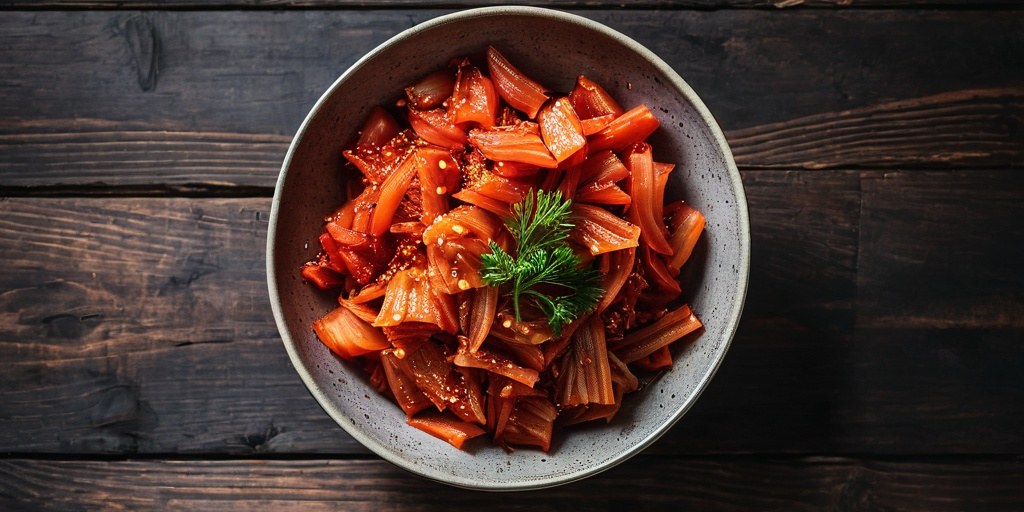
Fermented foods including kimchi, sauerkraut, and similar fermented vegetables are generally safe to eat during pregnancy in normal food amounts, and many shop-bought jarred or refrigerated versions are pasteurised, which eliminates most bacterial concern. The consideration is with unpasteurised, 'live' fermented products — including many artisan, home-made, or specifically marketed 'raw' or 'probiotic' kimchi and sauerkraut — which, like other unpasteurised foods, carry a small risk of harbouring Listeria or other bacteria, since fermentation does not guarantee the same safety profile as pasteurisation or cooking. Checking the label for 'pasteurised' is the simplest way to know which category a product falls into; if it isn't specified and the product is sold refrigerated as a 'live culture' food, treat it with the same caution as other unpasteurised products. Cooking kimchi into a dish (such as kimchi fried rice or kimchi stew) removes this concern entirely, since heat kills any bacteria present. Other fermented foods such as miso, tempeh, and fermented soy sauce are all cooked or processed in ways that make them safe as normally used in cooking.
What to be aware of
- Pasteurised, shop-bought kimchi and sauerkraut are safe in normal amounts.
- Unpasteurised 'live culture' or home-fermented versions carry a small Listeria-type risk — check labels.
- Cooking kimchi into a dish removes any remaining concern entirely.