Goat's Cheese
It depends on the type: soft, mould-ripened goat's cheese carries the same Listeria risk as Brie or Camembert, while hard, aged goat's cheese is safe like any other hard cheese.
Last updated: October 2026 Cross-checked against NHS guidance
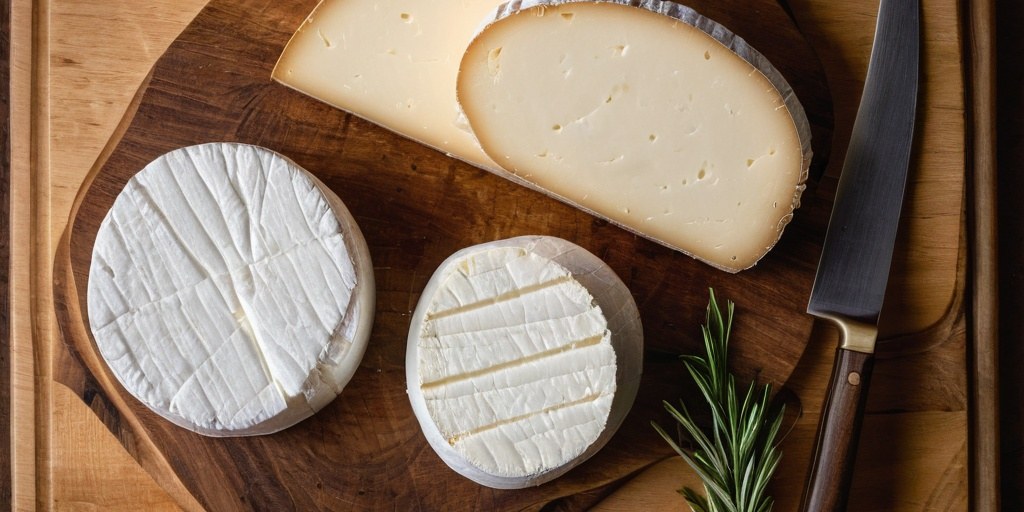
Goat's cheese isn't one single safety category — it covers everything from soft, white-rinded logs that are essentially the goat's-milk equivalent of Camembert, through to hard, aged wheels that behave exactly like mature Cheddar. The soft, mould-ripened versions (often sold as a log with a bloomy white rind, sometimes labelled 'chèvre') carry the same risk as other soft mould-ripened cheeses: their high moisture content lets Listeria survive and grow, even refrigerated, which is why they're treated the same as Brie and Camembert. Hard, aged goat's cheese — firm, crumbly, often with a natural rind rather than a soft bloomy one — doesn't have this moisture problem and is safe the same way any hard cheese is. As with Brie and Camembert, the soft versions become safe once cooked until piping hot throughout, so a warm goat's cheese salad or a baked goat's cheese tart is fine even using the soft variety. If the packaging doesn't make the type obvious, the texture is the best guide: soft and spreadable means treat it like Brie; firm and crumbly means treat it like Cheddar.
What to be aware of
- Check whether it's soft (bloomy white rind, spreadable) or hard (firm, crumbly) — they have different rules.
- Soft, mould-ripened goat's cheese should be avoided cold, the same as Brie or Camembert.
- Soft goat's cheese becomes safe once cooked until piping hot throughout — a warm salad or baked tart is fine.
- Hard, aged goat's cheese is safe to eat cold, like any other hard cheese.
Safe substitutes for Goat's Cheese during pregnancy
If you're craving goat's cheese but it's off the menu for now, these are safe swaps that still feel like a proper meal:
- Hard goat's cheese — Firm, aged varieties carry none of the soft-cheese risk and taste similar.
- Feta — A different style of goat's/sheep's milk cheese that's safe when made from pasteurised milk — check the label.
- Baked soft goat's cheese — Cooking the soft variety until piping hot removes the risk entirely.
US guidance
FDA guidance follows the same logic — soft, mould-ripened goat's cheese is grouped with other soft cheeses to avoid unless pasteurised and cooked; hard goat's cheese is not restricted.