Sage Tea
Sage tea should be avoided during pregnancy. It contains thujone, a compound that can stimulate uterine contractions and is harmful in significant amounts.
Last updated: July 2026 Cross-checked against NHS guidance
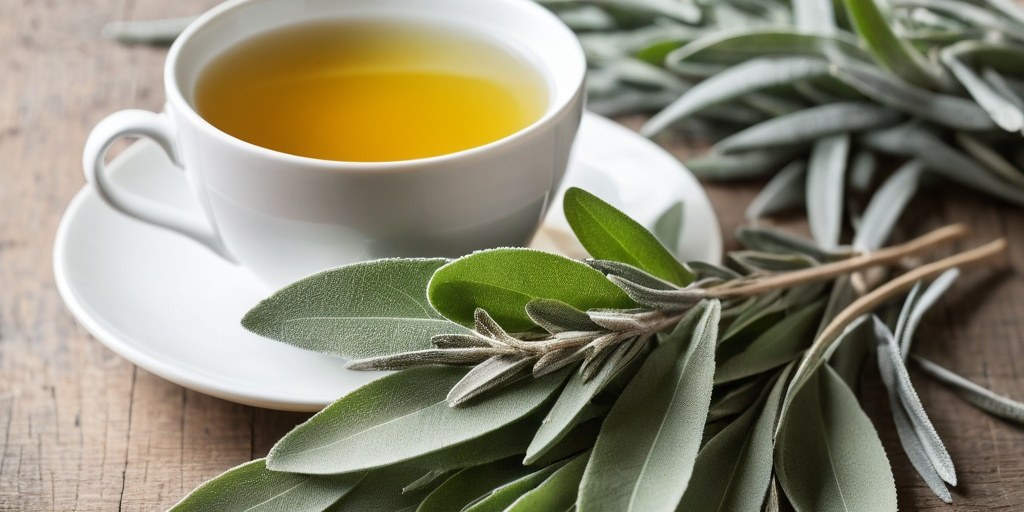
Sage tea — made from common culinary sage (Salvia officinalis) — should be avoided during pregnancy. Sage contains thujone, a naturally occurring compound that acts as a uterine stimulant and can trigger contractions. In large enough amounts, thujone is also neurotoxic. Using small amounts of fresh or dried sage as a cooking herb in food is considered safe — the quantities involved in flavouring a dish are too small to pose a risk. However, drinking sage as a tea concentrates the plant's compounds significantly more than culinary use, and this is where the risk arises. Sage tea is sometimes promoted as a remedy for sore throats, hot flushes (including those in pregnancy), and night sweats, but during pregnancy it should not be used for these purposes. There are safer alternatives for all of these complaints. Note that Spanish sage (Salvia lavandulaefolia) and clary sage (Salvia sclarea) are different species — clary sage in particular is used by some aromatherapists in labour, but should also be avoided in pregnancy before term.
What to be aware of
- Avoid sage tea throughout pregnancy.
- Small amounts of sage used as a culinary herb in cooking are safe — the risk is from concentrated tea.
- Avoid clary sage essential oil and clary sage tea during pregnancy.
- Sage-flavoured herbal tea blends should be checked for sage content.
Safe substitutes for Sage Tea during pregnancy
If you're craving sage tea but it's off the menu for now, these are safe swaps that still feel like a proper meal:
- Peppermint tea — Safe and effective for sore throats and digestive discomfort — a practical replacement for medicinal sage use.
- Ginger and honey tea — Soothing for sore throats and nausea, and well-established as safe in pregnancy.
- Rooibos tea — Caffeine-free, mild, and completely safe throughout pregnancy — a good general daily tea.