Butter
Butter is safe throughout pregnancy, including in cooking, baking, and spread on bread. Salted, unsalted, and most flavoured butters are all fine.
Last updated: October 2026 Cross-checked against NHS guidance
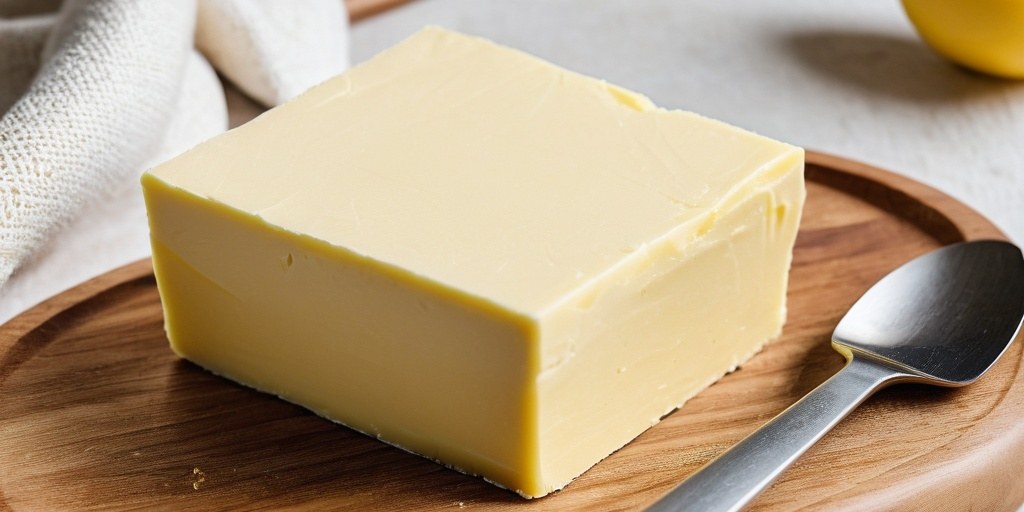
Butter made from pasteurised milk — which is virtually all butter sold in UK and US supermarkets — is safe to eat throughout pregnancy. It is a normal part of cooking and baking and does not carry any pregnancy-specific risk in the way that some unpasteurised or high-moisture soft cheeses do, because butter's high fat content and low moisture make it an inhospitable environment for Listeria and other bacteria of concern. As with any high-fat, high-calorie food, butter is best enjoyed as part of a balanced diet rather than in excessive quantities, but there is no need to avoid or restrict it specifically because of pregnancy. The only genuine caveat concerns raw, unpasteurised butter — a niche product occasionally sold at farm shops or made at home from raw milk — which carries the same Listeria and bacterial risks as any unpasteurised dairy product and should be avoided. Standard shop-bought butter, whether salted, unsalted, or spreadable, is safe.
What to be aware of
- Standard shop-bought butter (pasteurised) is safe in any quantity as part of a balanced diet.
- Avoid raw, unpasteurised butter, occasionally sold at farm shops or farmers' markets.
- Flavoured and cultured butters made from pasteurised milk are also safe.